

Hey there! As a supplier of H Beams, I often get asked about the weight of a typical H Beam. It's a common question, and for good reason. Knowing the weight is crucial whether you're an engineer planning a construction project, a contractor estimating costs, or just someone curious about these versatile steel structures.
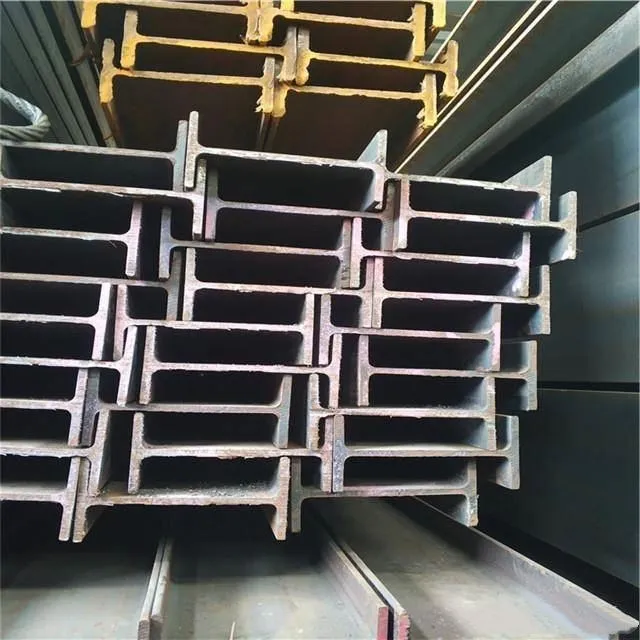
Let's start by understanding what an H Beam is. An H Beam, as the name suggests, has an "H" shaped cross - section. It consists of two horizontal flanges and a vertical web. This design gives it excellent load - bearing capabilities, making it a popular choice in construction, manufacturing, and other industries.
The weight of an H Beam isn't a one - size - fits - all kind of thing. It depends on several factors. One of the main factors is the size of the H Beam. H Beams come in a wide range of dimensions, with different flange widths, web heights, and thicknesses. Generally, the larger the beam in terms of these dimensions, the heavier it will be.
Another factor is the material. Most H Beams are made of steel, but there are different grades of steel, each with its own density. Higher - strength steels might have a slightly different density compared to standard carbon steels, which can affect the weight.
Let's take a look at some common sizes and their approximate weights. For a relatively small H Beam, say with a web height of around 100 mm, a flange width of 100 mm, and a thickness that's within the standard range, the weight per meter can be around 10 - 15 kilograms. These smaller H Beams are often used in light - duty applications like small sheds or some interior structural work.
On the other hand, for larger H Beams used in big construction projects such as high - rise buildings or large bridges, things get a lot heavier. A large H Beam with a web height of 600 mm or more, and appropriate flange widths and thicknesses, can weigh upwards of 100 kilograms per meter.
Now, if you're in the market for H Beams, we offer a variety of types. We have Narrow Flange H‑Beams. These are great when you need a beam with a relatively narrow flange for specific design requirements. They're often used in applications where space is a bit limited, or when you need to fit the beam into a particular structural layout.
Our Hot Rolled Steel H - Beam is another popular option. Hot rolling is a manufacturing process that gives the beam certain properties. It can result in a more uniform structure and better mechanical properties compared to some other manufacturing methods. These beams are widely used in general construction due to their reliability and strength.
We also have JIS H - Beam. JIS stands for Japanese Industrial Standards. These beams are manufactured according to specific Japanese standards, which might be important if you're working on a project that requires compliance with those standards. They offer high - quality and precise dimensions.
To calculate the weight of an H Beam more accurately, you can use a simple formula. The weight of an H Beam per unit length (usually per meter) can be calculated by considering the volume of the steel in the beam and multiplying it by the density of the steel. The volume of the H Beam is the sum of the volumes of the two flanges and the web. The density of steel is typically around 7850 kg/m³.
Let's break it down a bit more. The volume of a flange can be calculated as the area of the flange (flange width times flange thickness) times the length of the beam. And the volume of the web is the area of the web (web height times web thickness) times the length of the beam. Add these volumes together, multiply by the density of steel, and you'll get the weight.

But don't worry if math isn't your thing. We have a team of experts who can help you with these calculations. Whether you need to know the weight for a single beam or for an entire order of different sized H Beams, we've got you covered.
When it comes to choosing the right H Beam for your project, it's not just about the weight. You also need to consider the load - bearing requirements, the environmental conditions the beam will be exposed to, and the overall design of your structure. For example, if your project is in a coastal area where the beam will be exposed to saltwater, you might need a beam with better corrosion - resistant properties.
We understand that every project is unique, and that's why we offer personalized service. We can work with you to understand your specific needs and recommend the best H Beam options. Our goal is to make sure you get the right product at the right price.
If you're interested in purchasing H Beams, whether it's a small quantity for a DIY project or a large order for a commercial construction job, we'd love to hear from you. We can provide you with detailed quotes, technical specifications, and any other information you might need.
So, if you're ready to take the next step in your project and need high - quality H Beams, don't hesitate to reach out. We're here to help you make the right choice and ensure your project is a success.
References
- General knowledge of steel structures and H Beam manufacturing
- Industry standards and guidelines for H Beam production