

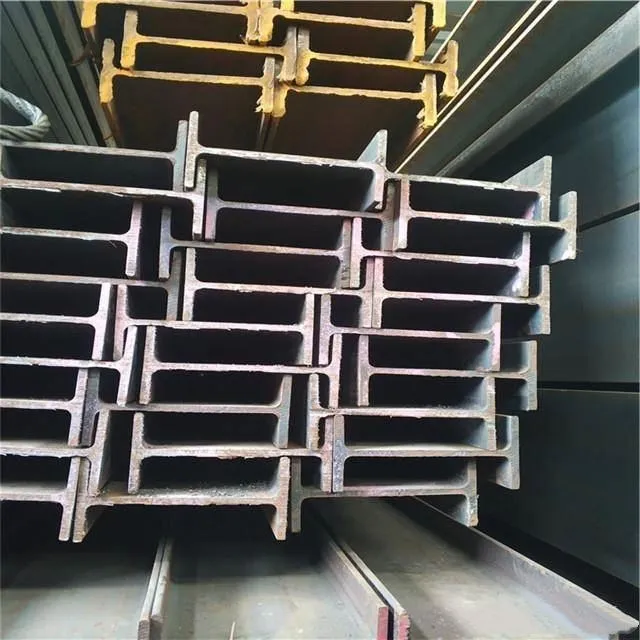
H Beam
Langzo Steel is located in the Chinese steel base-Boxing city, Shandong Province, China which is a steel group company integrating steel industry and international trade, our subsidiaries are: Shandong Langzo New Materials Co., Ltd.; Vanten Metal Corporation Limited and Tangshan Jingjin ColdRolled Galvanizing Co.. Ltd.etc. Our main products are flat products of Galvanized Steel Coils, Galvalume Steel Coils, Color Coated Steel Coils, Corrugated Steel Roofing Sheet, Cold Rolled FullHard, Aluminum Color Coating Coils, Tinplate, TFS, etc and long products of Angles, channel, H beam, Wire rod, Rebar/ Deformed Bar, steel pipe, steel strips. etc.
Why Choose US
Our Factory
Tangshan Xunzhuo International Trade Co., Ltd. is a steel group company integrating the steel industry and international trade. We have 7 production lines, more than 500 employees, and a monthly production capacity of 100,000 tons, completing orders for customers efficiently and timely.
Production Market
With more than 10 years development, Xunzhuo has gained a very good reputation of our clients from Europe, Africa, Latin America, Southeast Asia and Middle East, etc.The personnel in each position of the company have more than many years of experience in foreign trade.
Quality Assurance
Professional technical quality inspection personnel conduct quality inspections on the products ordered by customers. From production, packaging to transportation, they carefully conduct quality tracking throughout the entire process to ensure that customers receive satisfactory products.
Excellent service
We have a professional service team and a complete sales process. We promise that from the client's order to the customer's receipt of the goods, the whole process will allow clients to be 100% at ease!


Types of H Beam
GB H-Beam
GB H-beams also known as steel beams, are long steel with H-shaped sections.
JIS H-Beam
JIS H-Beam is a common building material with high strength and stiffness, can make the building more stable and safe, so in the building structure, H-Beam is often used to support and strengthen the wall, roof and other parts.
Galvanized H-Beam
Galvanized H-Beam is a kind of Economic section steel, which sectional area distribution is more optimized, the ratio of strength to weight is more reasonable, Mechanical properties of the section is more better.
Hot Rolled Steel H-Beam
Hot Rolled H-Beam is a more optimized section in area distribution, more reasonable strength-weight ratio of economic section efficient profile, because its section is same as the English letter "H".

Advantages of H Beam
Load-bearing capacity
H-beam steel is known for its high load-bearing capacity. Its wide flanges and vertical web construction allow it to bear strong vertical and horizontal stresses, making it ideal for supporting huge structures and carrying significant weight.
Structural stability
The wide flanges of h-beam steel provide increased resistance to bending and twisting stresses. This structural stability protects the entire structure's integrity, particularly in applications requiring strong support and resistance to deformation.
Versatility in construction
H-beam steel is versatile in construction because of its numerous sizes and dimensions. It can be tailored to unique project requirements, enabling engineers and architects to design and build structures of various sizes and configurations.
Efficient weight distribution
The h-shaped cross section of h-beam steel allows for efficient weight distribution along its length. This reduces concentrated stress spots and guarantees a more uniform distribution of forces, improving overall structural integrity and load-bearing capability.
Cost-effective
H-beam steel is frequently seen as a cost-effective choice for construction projects. It has a high strength-to-weight ratio, reducing the quantity of steel required while retaining structural integrity. This could result in cost savings on material and transportation charges.

EN standard: EN10034-1993, EN10025-3-2004
Grade: S235, S275, S355, S235JR, S355J0, S355J2, S355JR
ASTM standard: ASTM A572/A572M, ASTM A336M
Grade: A36、A572、A992
H-beam is a type of structural steel beam made from rolled steel. It has wide flanges that create a cross-section resembling an uppercase H and is used extensively in metal construction.
H-beams are divided into hot-rolled H-beams and welded H-beams (H). Hot-rolled H-beams are further divided into wide-flange H-beams (HW), middle-flange H-beams (HM) and narrow-flange H-beams (HN). ) three kinds.
H-Section Steel Beams are available in a range of sizes with widths between 4"-16" (10.2–40.6 cm), depths from 4"-16" (10.2–40.6 cm), and shared thicknesses between .35"-.83" (9-21 mm). H-Section Steel Beams are available in typical lengths between 8’-20’ (2.44-6.1 m).
The Production Process of H Beam

Staking out and cutting materials
Accurately calculate the cutting length of the steel beam based on the measured and reviewed frame column and beam axes. Cut the material to ensure the cut is flat and vertical. When the section steel needs to be extended, the 45° connection method is used, and the flange plate and web joints are staggered.
Steel beam assembly and welding
Before assembling the H-shaped steel beam, check whether the web and flange plates need to be corrected. Only when they are qualified can assembly and welding be carried out. Welding mainly uses (semi-)automatic welding machines, combined with manual arc welding. Before welding, the welder should review the joint quality of the weldment and the treatment of the welding area. If it does not meet the requirements, it should be repaired and qualified before welding. Do not use damp flux or rusty welding wire.
Steel beam rust removal and coating
The surface of the components will be rust-removed and painted. Only the rust will be removed within 100mm from the on-site welding seam. No painting will be done for the time being. After the on-site welding is completed, re-painting will be carried out according to the original painting requirements.
3.1 Rust removal
The steel structure uses sandblasting to remove rust and complies with the relevant regulations. The relative humidity of the construction environment should not be greater than 85%. The workpiece after derusting must be polished with a grinding wheel to remove all welding nodules, spatter, and the hardened layer of the flame correction area on the surface of the workpiece before proceeding to the next process. Rust needs to be removed again.
3.2 Application
After the rust removal of the steel is inspected and passed, the first primer should be applied to the surface. Generally, the primer should be applied within 24 hours after the rust removal is completed. The paint should be used in accordance with the design requirements. After the first coat of primer is dry, the intermediate paint and topcoat should be applied to ensure that the coating thickness meets the design requirements. The paint should be applied evenly and not smear during application.
(1)Construction preparation
- Choose paint according to the requirements of the design drawings.
- Prepare rust removal machinery and painting tools.
- Before painting, the steel structure and components have been inspected and accepted and meet the design requirements.
(2)Coating construction
Base surface cleaning: Before brushing, clean away rust, weld coating, welding spatter, oil, dust and other debris in the parts to be painted.Blend the paint, control the viscosity, consistency, and dilution of the paint, and stir thoroughly when mixing to make the paint color and viscosity uniform.When applying the first coat of paint, the painting direction should be consistent and the paint should be applied neatly.After the first coat is dry, apply the second coat. The direction of the second coat of paint should be perpendicular to the direction of the first coat. This will make the thickness of the paint film uniform.After painting, mark the components according to their original numbers: major components also need to be marked with weight, center of gravity position and positioning number.
(3)Coating inspection and acceptance
During and after surface coating construction, the painted workpieces should be protected from flying dust and other debris. After-painting inspection, the coating should be consistent in color, bright in color, bright, wrinkle-free, and pimple-free.
Uses of H-beam
Bridges
H-beams are often used in bridge construction to provide support for the roadway and to resist the lateral loads induced by vehicular traffic.
Cranes
H-beams are used in the construction of cranes to provide strong and stable support for the machinery and the loads being lifted.
Automotive
H-beams are used in the construction of vehicles, including cars and trucks, to provide structural support and reduce the weight of the vehicle.
Aerospace
H-beams are used in the construction of aircraft and other aerospace vehicles to provide structural support and reduce the weight of the vehicle.
Defense
H-beams are used in the construction of military vehicles, including tanks and armored personnel carriers, to provide structural support and protect against ballistic attacks.
Building Construction
H-beams are used in the construction of buildings as load-bearing elements in the frame, as well as in the floors, walls, and roofs, including residential, commercial, and industrial structures.
I-Beam vs H-Beam: What İs the Difference
H-Beam and I-Beam: Applications
H-Beams and I-beams are very similar, but they have different applications. If you're interested in using either of them for your next project, here's what you need to know:
- The best way to determine which beam is best for your project is to consult a professional. H-beams are better suited to support the load of the floor and roof over longer distances, while i-beams are better suited to support the weight of a wall or column.
- If you do decide on an H-beam or an I-beam, note that these beams have different minimum spans; this means that if your space has a large span (i.e., it's long), then an I-beam may not be right for it because it requires more material than other designs.
H-Beam and I-Beam: Projects
- H-beam and I-beam are both prone to bending, buckling, and torsional deformation. H-Beam can be used in the construction of buildings due to its ability to resist tension forces in compression or shear through its sides. The property of being able to withstand both tension and compression makes it ideal for building designs that require support for vertical loads such as cables or girders.
- I-beams are commonly used as structural components in large buildings due to their ability to resist lateral forces from wind or earthquakes without buckling under pressure from high winds or earthquakes.
I-Beams are More Suited to Carrying Heavier Loads Over a Beam Span or Length
- I-beams are designed to carry heavier loads over a beam span or length, so if you're looking for a structural member that can handle large loads, I-beams could be the better choice.
- I-beam is stronger in bending than H-beam because its flanges provide resistance against the load and support each other when the beam bends. The flanges of an H-beam don't have this advantage, so they tend to buckle under high loads and fail more easily under bending stress.
- Both The I-Beam and H-Beam are Very Versatile and Can Be Used For Various Applications.
- Both the I-beam and H-beam are very versatile and can be used for various applications.
- They are both structural steel beams that have been developed to provide support for buildings and other structures.
- The main difference between these two types of beams is their shape. An "I" beam has a triangular cross-section, while an "H" beam has a rectangular one (hence the name).
- Another difference between them is that an "H" beam is usually longer than an "I" beam of similar size and weight capacity. This means that an H-beam will take up more space when installed, but it also offers greater strength when carrying heavy loads over long spans or lengths; whereas an I-beam may be better suited to handling smaller loads over short span lengths due to its increased stiffness (less flexibility).
- As a result, H beams are generally considered to be more durable than I beams due to their greater weight and stiffness. However, there are several variables that can influence a beam's strength and performance, including its manufacturing process, composition, and design. Ultimately, it is up to individual engineers and designers to choose which type of beam is ideal for a particular purpose.
FAQ
We're professional h beam manufacturers and suppliers in China, specialized in providing high quality customized service. We warmly welcome you to wholesale high-grade h beam in stock here from our factory. Contact us for quotation.
direct from manufacturer h beam, h beam for building, long wrapping products