

In the contemporary global economic landscape, the emergence of regional economic blocs has been a prominent phenomenon. As an IPE (International Political Economy) supplier, I have witnessed firsthand how the principles of IPE can offer profound insights into the formation and development of these blocs. This blog post aims to explore how IPE explains the emergence of regional economic blocs, drawing on both theoretical perspectives and real - world examples.
Theoretical Foundations of IPE in Explaining Regional Economic Blocs
Power and Hegemony
One of the core tenets of IPE is the role of power in international relations. In the context of regional economic blocs, powerful states often play a leading role in their formation. A hegemonic power may choose to initiate or support the creation of a regional economic bloc as a means to enhance its own economic and political influence.
For example, the United States was a driving force behind the creation of NAFTA (North American Free Trade Agreement, now replaced by USMCA - United States - Mexico - Canada Agreement). By promoting free trade within North America, the US aimed to secure markets for its industries, gain access to resources, and strengthen its position relative to other global powers. In this case, the US used its economic power to shape the regional economic order, and the other member states, Mexico and Canada, participated to reap benefits such as increased investment and access to the large US market.
Interest Groups and Domestic Politics
IPE also emphasizes the role of domestic interest groups in shaping international economic policies, which in turn can lead to the formation of regional economic blocs. Different industries, labor unions, and other interest groups within a country have varying interests in trade and economic cooperation.
In the European Union (EU), for instance, agricultural and manufacturing industries have had a significant say in the EU's economic policies. Farmers' associations pushed for policies like the Common Agricultural Policy (CAP), which not only protected the agricultural sector but also influenced the overall economic integration process within the EU. At the same time, manufacturing industries advocated for free trade zones and harmonized regulations within the bloc to increase their competitiveness in the global market. These domestic interest - group pressures combined to drive the continuous expansion and deepening of the EU as a regional economic bloc.
Economic Interdependence
The concept of economic interdependence is central to IPE. As countries become more economically interdependent, they have a greater incentive to form regional economic blocs to manage and enhance this interdependence. When countries are linked through trade, investment, and financial flows, they face fewer risks and can enjoy greater economic stability within a regional framework.
The Association of Southeast Asian Nations (ASEAN) is a prime example. The member states of ASEAN have become increasingly interdependent over the years, with trade and investment growing rapidly within the region. By establishing ASEAN Free Trade Area (AFTA), these countries aimed to further strengthen their economic ties, reduce trade barriers, and promote regional economic growth. The creation of AFTA facilitated the flow of goods, services, and capital among member states, enhancing their collective economic competitiveness in the global arena.
IPE and the Role of My IPE Supply Business
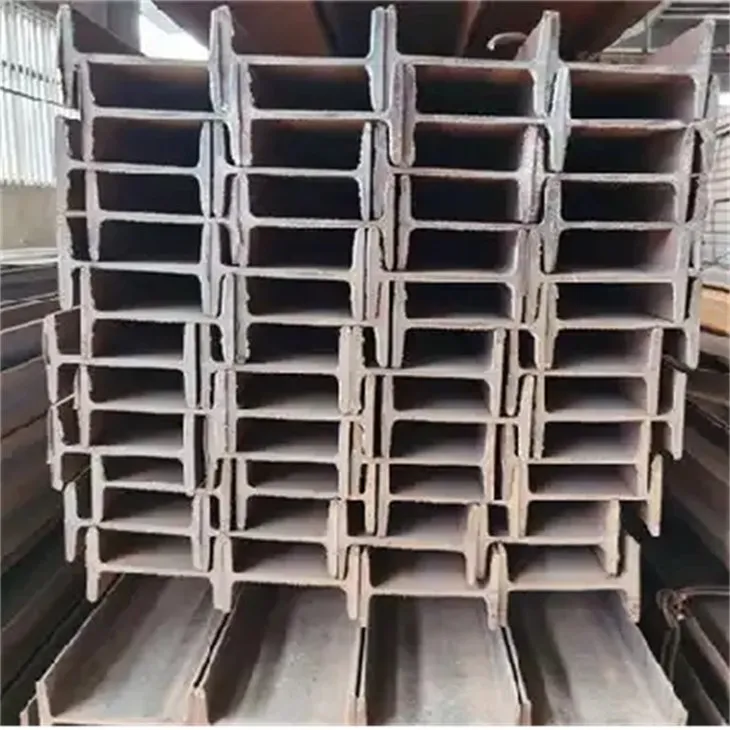
As an IPE supplier, my business is closely related to the economic activities within and between regional economic blocs. The products I offer, such as Bending Section Steel, ASTM A36 Steel I Beam, and Cold - rolled I - beam, are crucial for various construction and manufacturing projects in the regions where these blocs operate.
Market Expansion within Blocs
Regional economic blocs often create new market opportunities for suppliers like me. With the reduction of trade barriers, such as tariffs and quotas, within the bloc, it becomes easier for my products to reach a wider customer base. For example, in the EU, the single market allows me to sell my IPE products across 27 member states without facing the same level of trade restrictions as in global trade. This has significantly increased the market potential for my business and has allowed me to establish long - term relationships with customers in different parts of the EU.
Policy Harmonization and Efficiency
Another advantage is the harmonization of regulations within regional economic blocs. This means that I do not have to deal with a multitude of different standards for my products in each country. For instance, in the case of the steel products I supply, the EU has established a set of common standards for quality, safety, and environmental protection. This not only simplifies my production processes but also improves the overall efficiency of my business. I can focus on meeting one set of high - quality standards and be confident that my products will be accepted throughout the bloc.
Competition and Innovation
At the same time, being part of a regional economic bloc also exposes me to a more competitive environment. My competitors within the bloc are also vying for the same market share. This competition, however, has spurred me to invest in research and development to improve the quality and performance of my products. For example, I have been working on developing new manufacturing processes for my Cold - rolled I - beam to make it stronger and more cost - effective, which in turn benefits my customers and the overall construction industry in the region.
Real - World Examples of Regional Economic Blocs and IPE Explanations
Mercosur in South America
Mercosur, the Southern Common Market, was established in 1991 by Argentina, Brazil, Paraguay, and Uruguay. From an IPE perspective, the formation of Mercosur can be seen as a response to the power dynamics in South America. Brazil, as the largest and most powerful economy in the region, played a key role in promoting regional integration. By creating a common market, Brazil aimed to increase its economic influence in the region, secure markets for its industries, and enhance its bargaining power in global trade negotiations.
Domestic interest groups in the member countries also played a part. The agricultural and manufacturing sectors in these countries saw opportunities for growth through regional trade. For example, Brazilian farmers could access larger markets for their agricultural products in neighboring countries, while manufacturers could benefit from economies of scale by producing for a larger regional market.
The African Continental Free Trade Area (AfCFTA)
The AfCFTA, which came into effect in 2021, is a significant step towards regional economic integration in Africa. From an IPE standpoint, the creation of AfCFTA is driven by the need to address the historical economic marginalization of the African continent. African countries have long been at the periphery of the global economic system, and by forming a large - scale regional economic bloc, they aim to increase their collective bargaining power in the global market.
In addition, domestic interest groups, such as small - and medium - sized enterprises (SMEs) in African countries, have been strong advocates for the AfCFTA. These SMEs see the removal of trade barriers within the continent as an opportunity to expand their businesses, access new markets, and participate more actively in regional and global value chains.
Conclusion and Call to Action
In conclusion, IPE provides a comprehensive framework for understanding the emergence of regional economic blocs. The concepts of power, interest groups, and economic interdependence all play crucial roles in explaining why countries choose to form these blocs. As an IPE supplier, I have benefited greatly from the opportunities presented by regional economic blocs, such as market expansion, policy harmonization, and innovation incentives.
If you are in the construction or manufacturing industry and are looking for high - quality IPE products, including Bending Section Steel, ASTM A36 Steel I Beam, and Cold - rolled I - beam, I invite you to reach out for a procurement discussion. I am committed to providing you with the best products and services to meet your business needs.

References
- Gilpin, R. (1987). The Political Economy of International Relations. Princeton University Press.
- Keohane, R. O. (1984). After Hegemony: Cooperation and Discord in the World Political Economy. Princeton University Press.
- Hettne, B. (2005). Regionalism: Old and New. Journal of International Affairs, 59(1), 1 - 32.