

Hey there! As a JIS I - Beam supplier, I often get asked about how to calculate the deflection of JIS I - Beams under different loads. It's a topic that might seem a bit intimidating at first, but once you understand the basics, it becomes much more manageable. Let's dive right in!
Understanding JIS I - Beams
First off, what exactly are JIS I - Beams? JIS stands for Japanese Industrial Standards. These I - beams are designed and manufactured according to the specific requirements set by the Japanese standards. They're known for their high quality and reliability, which makes them a popular choice in a wide range of construction and engineering projects.
The shape of an I - beam is what gives it its strength. It has a cross - section that looks like the letter "I". The top and bottom parts, called flanges, are wide and flat, while the middle part, called the web, connects the two flanges. This design allows the beam to resist bending forces effectively by distributing the load across its entire structure.
Types of Loads
Before we start calculating deflection, we need to understand the different types of loads that can act on a JIS I - Beam.

1. Point Load
A point load is a single force applied at a specific point on the beam. For example, if you have a large piece of equipment placed at the center of the beam, it creates a point load. Point loads are common in industrial settings where heavy machinery is supported by beams.
2. Uniformly Distributed Load (UDL)
A UDL is a load that is spread evenly over the length of the beam. Think of it like a long, heavy platform resting on the beam. The weight of the platform is distributed uniformly across the beam's length. UDLs are often seen in flooring systems where the weight of the flooring material and any objects on it are spread evenly.
3. Uniformly Varying Load
This is a load that changes linearly along the length of the beam. For instance, if you have a container filled with a liquid that is gradually emptied from one end to the other, the load on the beam-supporting the container changes in a linear fashion.
Calculating Deflection
Now, let's get to the meat of the matter - calculating deflection. The deflection of a beam is the amount it bends under a load. There are several formulas we can use depending on the type of load and the support conditions of the beam.
For a Simply Supported Beam with a Point Load at the Center
The formula for the maximum deflection ($\delta_{max}$) of a simply supported beam with a point load ($P$) at the center is given by:
$\delta_{max}=\frac{PL^{3}}{48EI}$
where:
- $P$ is the point load
- $L$ is the length of the beam
- $E$ is the modulus of elasticity of the material (for steel, $E$ is typically around $200\times10^{9}\ Pa$)
- $I$ is the moment of inertia of the cross - section of the beam. You can find the moment of inertia values for different JIS I - Beam sizes in engineering handbooks or from the beam manufacturer.
For a Simply Supported Beam with a Uniformly Distributed Load
The formula for the maximum deflection of a simply supported beam with a uniformly distributed load ($w$) is:
$\delta_{max}=\frac{5wL^{4}}{384EI}$
where $w$ is the load per unit length.
For a Cantilever Beam with a Point Load at the Free End
If you have a cantilever beam (a beam that is fixed at one end and free at the other) and a point load ($P$) is applied at the free end, the maximum deflection is given by:
$\delta_{max}=\frac{PL^{3}}{3EI}$
Factors Affecting Deflection
There are several factors that can affect the deflection of a JIS I - Beam:
1. Material Properties
The modulus of elasticity ($E$) of the material plays a crucial role. As mentioned earlier, steel has a relatively high modulus of elasticity, which means it is stiffer and will deflect less compared to materials with lower $E$ values.
2. Beam Geometry
The cross - sectional shape and size of the beam, specifically the moment of inertia ($I$), have a significant impact on deflection. Beams with larger moments of inertia will deflect less under the same load. For example, a deeper I - beam will generally have a larger moment of inertia and thus less deflection.
3. Load Magnitude and Type
Obviously, the greater the load, the more the beam will deflect. Also, different types of loads (point, UDL, etc.) will cause different deflection patterns.
Practical Considerations
When calculating deflection in real - world scenarios, there are a few practical things to keep in mind.
First, make sure you're using the correct values for $E$ and $I$. These values can vary depending on the specific grade of steel and the exact dimensions of the beam. If you're unsure, you can always refer to the manufacturer's specifications or consult an engineer.
Second, consider the safety factor. In engineering, it's common to design structures with a safety factor to account for uncertainties in loadings, material properties, and construction quality. A typical safety factor for deflection might be around 1.5 - 2.0, meaning the allowable deflection is calculated as the calculated deflection divided by the safety factor.
Related Products
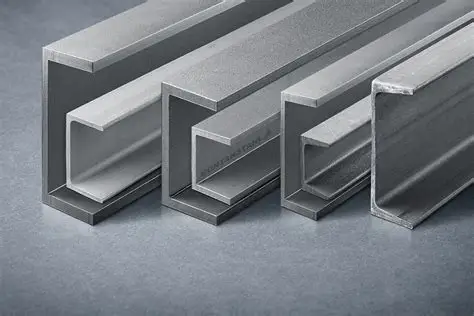
If you're in the market for other types of structural steel, we also offer a variety of related products. Check out our ASTM A36 Steel I Beam, which is a popular choice for many construction projects. We also have Channel Steels and Bending Section Steel available for your specific needs.
Conclusion
Calculating the deflection of JIS I - Beams under different loads is an important part of engineering and construction. By understanding the types of loads, the relevant formulas, and the factors that affect deflection, you can ensure that your structures are safe and reliable. If you're in the market for high - quality JIS I - Beams or any of our other structural steel products, feel free to reach out to us for a quote and to discuss your specific requirements. We're here to help you make the right choice for your project.
References
- Gere, J.M., & Timoshenko, S.P. (1997). Mechanics of Materials. PWS Publishing.
- Young, W.C., Budynas, R.G., & Sadegh, A.M. (2011). Roark's Formulas for Stress and Strain. McGraw - Hill.